
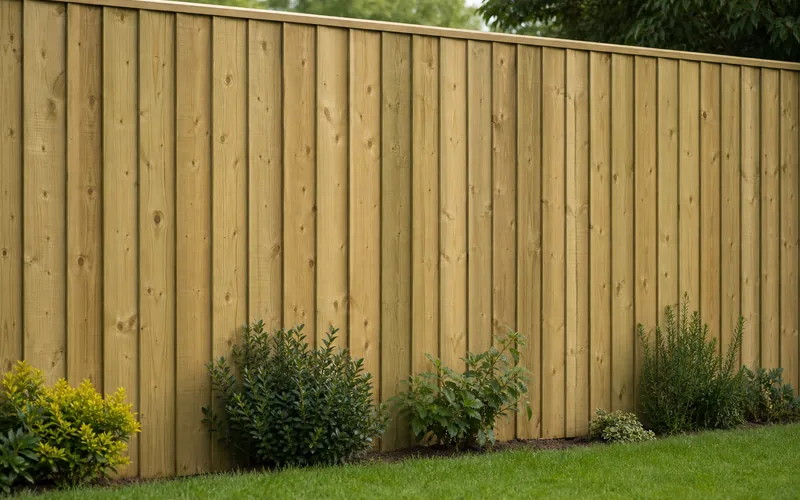
Close Board Fencing
Board-by-board featheredge on concrete posts — stronger than standard panels.
Learn More →Concrete posts, gravel boards, and panel systems — built to handle wet ground and long boundary runs across Chesterfield.
Concrete post and panel fencing uses pre-cast concrete posts and gravel boards with timber or composite panels slotted between them. It's one of the most common fence systems across Chesterfield — you'll see it on long rear boundaries in Newbold, Hasland, and Brimington where timber posts would rot at ground level within a few years in the wet clay soil. The concrete posts and gravel boards don't rot; only the panels between them need replacing over time.
The system works like this: concrete posts are set in postcrete at 1.8m or 2.4m centres depending on panel width. Concrete gravel boards sit at the bottom between posts, keeping the panels off the ground. Panels — lap, close board style, or waney edge — slot into the post grooves and are secured with concrete post caps. When a panel gets storm damaged, you unslot the old one and slide a new one in. No digging out posts, no dismantling the whole run.
We install full concrete post and panel runs and also upgrade existing timber-post fences to concrete posts where the timber has failed. If you've already got concrete posts but the panels are blown out or rotten, we'll replace the panels and gravel boards while keeping the post structure that's still sound.
The practical choice for long boundaries on wet or exposed ground.
Concrete posts don't rot at ground level — the main reason timber fences fail in Derbyshire clay.
Storm damage? Unslot the broken panel and slide a new one in — posts stay put.
Concrete gravel boards take ground moisture so panels don't sit in the dirt rotting.
Concrete post structure lasts decades — only panels need periodic replacement.
Panels stepped down slopes — works on the gradients common in Boythorpe and Calow.
Swap rotten timber posts for concrete on existing panel runs without starting again.
From survey to a boundary that lasts.
Tell us the approximate length, whether it's a new install or panel replacement on existing posts.
We measure the run, check ground conditions, slopes, and whether existing posts can be reused.
Written quote covering posts, gravel boards, panels, caps, and removal of old fencing if needed.
Posts set in postcrete, gravel boards fitted, panels slotted and capped. Old materials cleared.
Often considered alongside concrete post and panel fencing.
Board-by-board featheredge on concrete posts — stronger than standard panels.
Learn More →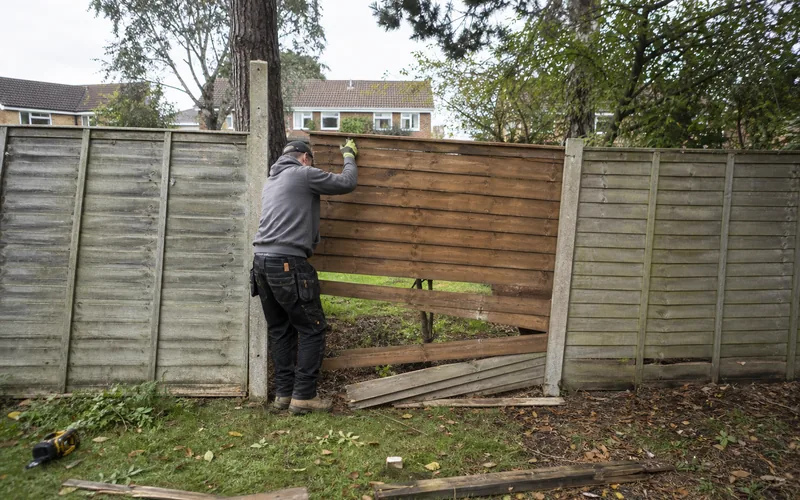
Panel replacement and post upgrades on existing concrete post systems.
Learn More →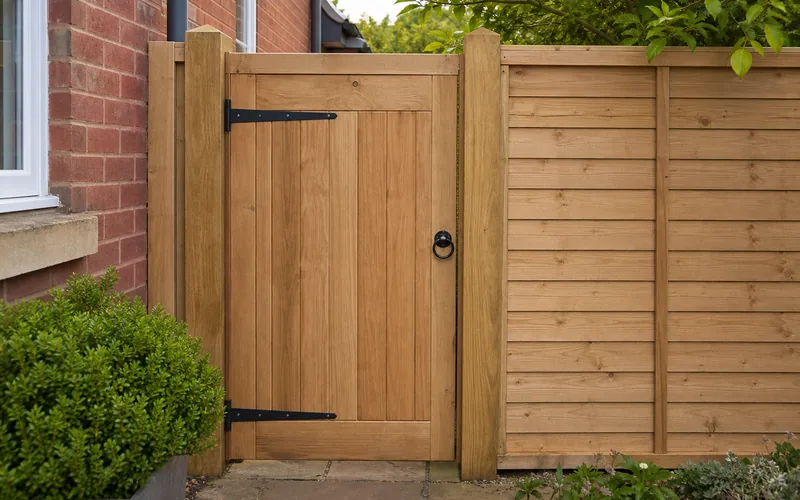
Side and garden gates fitted between concrete posts to match the fence line.
Learn More →Concrete post and panel fencing across Chesterfield. Working in your area? We cover your neighbourhood.
"Replaced the whole back boundary in Newbold with concrete posts and gravel boards — about 25 metres. Previous timber posts had rotted through in less than eight years. Shouldn't have that problem again, and if a panel goes I can swap it without digging holes."
Common questions about concrete post fencing in Chesterfield.
Concrete posts don't rot at ground level — the main failure point for timber posts in wet clay soil common around Newbold, Hasland, and Brimington. They handle wind load better on long exposed runs and make panel replacement straightforward because panels slot between the posts without nails or screws into the post itself.
Gravel boards are the horizontal concrete or timber boards that sit at the bottom of the fence between posts, below the panels. They take ground contact and moisture so the panels don't sit in the dirt rotting from the bottom up. On concrete post systems, concrete gravel boards match the posts and last decades.
Yes — that's the main advantage of concrete post and panel systems. If a panel gets storm damaged, you unslot the old one and slide a new panel in between the existing posts. No need to dig out posts or dismantle the whole run for one broken section.
Concrete posts and gravel boards typically last 25–30 years or more. Timber panels between them will need replacing sooner — every 10–15 years depending on exposure — but the post structure remains sound, which keeps long-term maintenance costs down.
Yes. Panels can be stepped down a slope by cutting the panel height or using shorter panels on each step. Concrete posts are set vertically at each step point. It's more flexible than a rigid close board run on a steep gradient.
If you already know what service you need, fill in the form and we will come back to you within 2 hours with a clear next step. No pressure and no vague promises.
We can quote for close board runs, repairs, side gates, commercial perimeters, and security fencing. If access is tight or you are unsure on timber vs concrete posts, add that in the message and we will advise properly.
Fill in the form and we will get back to you quickly. Prefer to talk first? Call 01224 929406.